
Command the Stage.
Inspire the World.


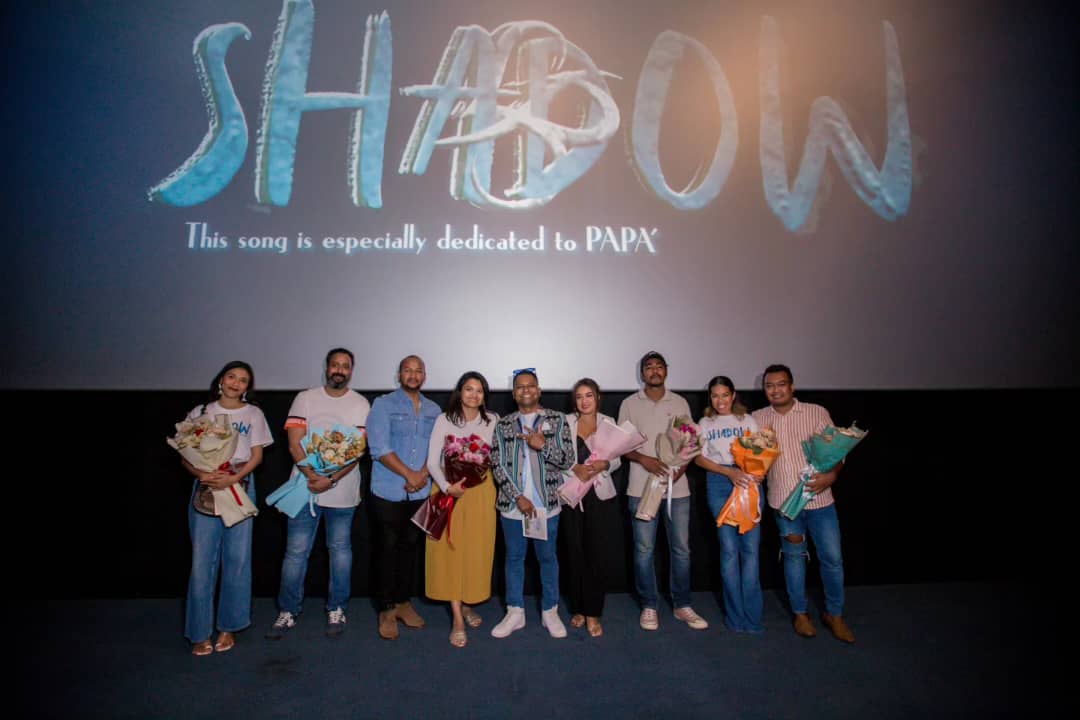
The resignation letter was already written. It had been sitting in my desk drawer for weeks, drafted and redrafted, folded and unfolded, until the paper had worn soft at the creases. I had been carrying it like a secret. And then, one morning in August 2019, I submitted it.
Eleven years. That is how long I had worked for the Government of Timor-Leste, coordinating the National Directorate of Human Resources at the Ministry of Finance, training civil servants across all twelve municipalities, serving as a trusted adviser to the organisations and institutions that were building this young country’s public administration from the ground up. By any measure, I had a career. A good one. A respected one.
And I walked away from it.
Not impulsively. Not in frustration. But with twelve months of deliberate, careful thought behind me, the kind of systematic analysis I had spent years applying to public finance, now turned on my own life. The risk matrix. The contingency plan. The exit conditions. I had mapped it all. And then I folded the map, trusted what I knew to be true about myself, and handed in the letter.
“I felt extremely happy,” I said to someone who asked how I was feeling that day. “Accomplished. Like I was finally going to do what I love.”
That was the beginning of one of the most exhilarating, terrifying, clarifying, and instructive experiences of my life, building a personal brand from zero. And here, honestly and completely, is what I learned.
The first thing I did was invest in my voice. Not metaphorically, literally. I enrolled in an intensive vocal coaching programme with Indra Aziz, one of Indonesia’s most celebrated vocal coaches, and worked with her for three months online. I practiced every day. I recorded myself. I listened back with the kind of ruthlessness that only works when you love something enough to be honest about how far you still have to go.
This was not just about singing. It was about the declaration I was making to myself: I am doing this seriously. This is not a hobby. This is who I am choosing to become.
The investment in the voice was followed by investments in everything else, music production, video editing, photography, social media strategy. I studied how other artists built their presence. I watched what worked and what didn’t. I trained my body. I got new tattoos. I made choices about my image that reflected not who I had been, but who I was becoming.
People think personal branding is about aesthetics. It is not. It is about identity. The aesthetics follow when you are clear about who you actually are.
Months after I resigned, COVID-19 reached Timor-Leste. The world stopped. Events were cancelled. Stages went dark. The exact environment I had built my plan around, live performance, in-person hosting, brand activations, evaporated almost overnight.
I will be honest: there were moments of doubt. Not deep doubt, not the kind that makes you question the fundamental decision. But the quiet, daily kind that arrives at 2:00am when you have no gigs booked and the world is locked down and you are sitting with your guitar asking yourself whether you have made a miscalculation.
What saved me was not strategy. It was the three values I had made my anchors before I left government: Consistency. Patience. Positivity.
Consistency meant I kept working when there was nothing to show for it yet. I kept training my voice. I kept making content. I kept preparing for a world that had not yet reopened.
Patience meant I trusted the plan across a longer time horizon than most people are comfortable with. Warren Buffett is one of my most important role models, not because of investment, but because of this: his extraordinary patience is the engine of his extraordinary results. You cannot rush becoming something genuine.
Positivity was the hardest one. Not toxic positivity, not pretending everything was fine when it wasn’t. But the genuine belief that a positive mindset, held consistently, changes what you see and what you do. I have experienced this too directly to doubt it.
“Always stay positive and calm in every situation. A positive mindset and attitude really help self-growth. I believe that deeply, not as a slogan, but as something I have proven to myself.”
⎯ BEPI WHITEHEART
When the world reopened, things moved quickly. The first Samsung campaign with FoneHaus arrived. Then Nike Timor-Leste. Then Telemor MOSAN. Then Aero Dili. Then more Samsung campaigns, Galaxy S23, S24, S25 Ultra, Galaxy Z Fold, Galaxy Buds, Watch. Each one building on the last.
But here is what I want you to understand: those partnerships did not build the brand. The brand made those partnerships possible. What built it was something that could not be purchased or accelerated:
Authenticity across a sustained period of time.
People in Timor-Leste had watched me for years. They had seen me at Independence Day ceremonies. They had seen me hosting ministerial events. They had seen me at Java Jazz in Jakarta, the first solo Timorese male artist to perform there. They had watched the MEHI Voice Competition evolve through three seasons. They had listened to the debut album, the EP, the new English singles. The brand was not built in a campaign. It was built in a thousand genuine moments, accumulated over time, until the trust was real and the reach was earned.
That is the only personal branding strategy that lasts.
I had incredible material from almost the moment I left government, the first rehearsals, the early morning practices before anyone was watching, the first gig that made me feel it was real, and I did not document any of it. I was so focused on doing the work that I forgot the work was also a story. A story that people would have wanted to follow if I had let them.
Document everything. The beginning is the most powerful chapter. It is the one that makes people root for you. And it is the one you can never go back and recreate.
In the early days, I was trying to be everything at once, singer, MC, consultant, motivational speaker, brand ambassador. All of these things are true. But in the beginning, the message was too diffuse to land with clarity.
What I have learned is that a personal brand is not an inventory of everything you do. It is a clear, consistent signal about who you are and what you stand for, and all the other dimensions follow once that core is understood. For me, that core was eventually articulated as: personality and humility. Everything I do flows from those two things. I wish I had found those words earlier.
For a long time, I tried to build everything myself, the social media, the photography, the video, the strategy, the business development. The independence felt necessary. But what it actually cost me was time and energy that could have been redirected into the craft itself.
Build the team as early as you can. Surround yourself with people who are better than you at the things that are not your core gift. Trust them. Let them carry the parts of the work that do not require you specifically. Your time is the only resource that cannot be recovered once it is spent.
Someone once asked me how I describe my brand character. I said: Simba from the Lion King.
They expected something more corporate. A positioning statement, perhaps. A value proposition. Instead they got a Disney character, one filled with positive emotions, fighting to bring a bright future to the people around him, coming into his own through difficulty and then choosing to return and use what he has learned.
But I meant it completely. Because personal branding, at its deepest level, is not about logos, campaigns, social media algorithms, or follower counts. It is about the character you are choosing to develop and the contribution you are committing to make. Everything else is expression.
Simba’s story is not about becoming famous. It is about becoming himself, and in doing so, becoming useful to the world around him. That is the only brand story worth building.
I do not tell this story to suggest that what I did is the right path for everyone. I tell it because I spent twelve months trying to find examples of people who had made a similar kind of transition, from a stable, respected public career into a deeply personal creative and entrepreneurial one, and struggled to find them in a Timorese context.
I hope this is useful to someone who is carrying their own letter in their desk drawer, wondering whether to submit it. Wondering whether the thing they love is worth the risk of choosing it completely.
My answer, hard-won and sincerely held, is: if you can already see it in your mind and feel it in your bones, it will become real. But you have to move toward it. No one will open the drawer for you.
“If I can already see it in my mind and feel it in my bones, it will definitely become reality.”
⎯ BEPI WHITEHEART
If you are somewhere in the middle of building your own identity, or if you are still standing at the drawer, I hope this piece has given you something real to hold onto. And if you want to talk about it, you know where to find me.